How to Prevent Dog Boredom With Daily Enrichment
A dog who has emptied the toy basket, barked at the window for an hour, or turned your favorite shoe into a project is not trying to give you a hard time. They may be telling you they need something meaningful to do. Learning how to prevent dog boredom starts with seeing daily life from your dog's point of view: their mind, nose, body, and need for connection all need regular work.
Every dog is different. A young herding breed, a senior companion, and a newly adopted rescue will not need the same routine. But with a few dependable enrichment habits, you can help your dog feel calmer, more fulfilled, and more at home with the people they love.
Why boredom shows up as bad behavior
Dogs were built to explore, sniff, search, learn, and move. When those outlets are missing, excess energy and frustration have to go somewhere. That can look like chewing, digging, pacing, demand barking, counter surfing, or rough play that is hard to redirect.
Boredom is not the only reason for these behaviors. Pain, anxiety, fear, digestive discomfort, and changes at home can all affect a dog's behavior. If a behavior is sudden, intense, or paired with changes in appetite, sleep, or bathroom habits, talk with your veterinarian. A healthy enrichment plan supports your dog, but it is not a replacement for medical or behavioral care.
The goal is not to keep your dog entertained every second. Dogs also need rest. The goal is to give them a predictable mix of physical activity, mental challenges, social time, and quiet recovery.
How to prevent dog boredom with a daily routine
A reliable routine does more than tire a dog out. It gives them a sense of security. When your dog can count on a walk, a chance to sniff, a meal activity, and a little time with you, they are less likely to create their own excitement in ways you do not enjoy.
Start by looking at the parts of the day when boredom hits hardest. For many families, it is the morning rush, the long stretch while everyone is at work or school, and the evening when people are busy making dinner. Add small activities around those moments instead of relying on one long session at the end of the day.
For example, a morning walk can include time for your dog to sniff rather than march at a fast pace from start to finish. A midday break might be a short backyard game or a food puzzle. In the evening, five minutes of training followed by a calming chew can help your dog settle near the family.
Consistency matters more than a perfect schedule. A busy day may call for shorter activities, while a weekend may leave room for a trail walk or a new place to explore. Meet the dog in front of you, not an unrealistic routine online.
Make walks mentally rich, not just longer
Walking is valuable, but the route and pace matter. A quick bathroom break may not satisfy a dog who has spent hours waiting for stimulation. Letting your dog safely stop and investigate scents gives their brain valuable information. That is work, even if it does not look like exercise to us.
Try changing routes a few times each week. Practice simple cues along the way, such as sit at a curb, wait before crossing, or touch your hand on cue. If your dog is reactive around other dogs or people, choose quieter routes and give them enough distance to feel safe. A stressful walk is not enrichment.
High-energy dogs may need more vigorous movement, such as a game of fetch, a controlled flirt pole session, or a hike suited to their age and fitness. Puppies and growing dogs need care with repetitive, high-impact exercise, while senior dogs may do better with several gentle walks. Your veterinarian can help you choose safe activity levels.
Put your dog's nose to work
A dog's sense of smell is one of their greatest tools. Scent games are inexpensive, flexible, and especially helpful on rainy days or when outdoor time is limited.
Begin simply by tossing a few pieces of your dog's regular food or a suitable treat into the grass and inviting them to find it. Indoors, hide treats in easy-to-reach spots while your dog waits in another room. As they learn the game, make the hiding places slightly more challenging.
You can also scatter part of a meal across a snuffle mat, in a folded towel, or in a puzzle feeder designed for dogs. Always supervise when a new item is involved, particularly if your dog tends to chew and swallow fabric, plastic, or small pieces. The right activity should create focused engagement, not a safety risk.
Turn meals into a job worth doing
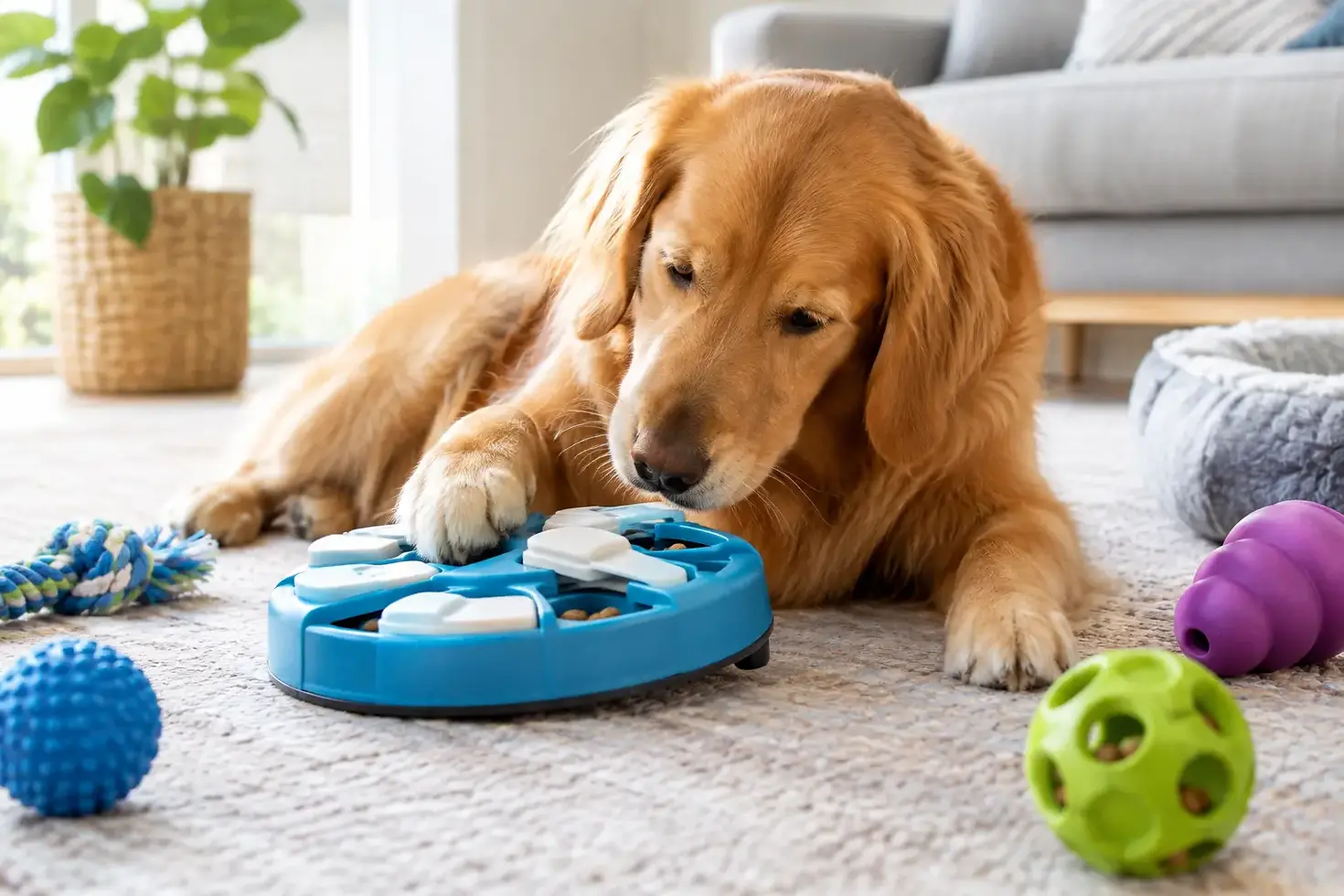
For many dogs, dinner disappears from a bowl in seconds. Serving at least part of a meal through an enrichment toy can extend that experience and give your dog a satisfying task.
Use your dog's normal kibble or approved food when possible, especially if they need to manage calories. A portion-controlled puzzle feeder, slow feeder, treat-dispensing toy, or frozen food toy can make a meal last longer. Introduce puzzle toys at an easy level first. If the challenge is too difficult, a dog can become frustrated and walk away.
Check ingredients carefully when adding extras. Some human foods are unsafe for dogs, and rich fillings can upset sensitive stomachs. Fresh water should always be available. If your dog has food allergies, dental concerns, or a prescription diet, ask your veterinarian what options fit their needs.
Teach small skills that build confidence
Training is not just about manners. It is a shared activity that gives your dog clear communication and a chance to succeed. Short, upbeat sessions often work better than one long lesson.
Practice practical cues like come, place, leave it, and settle. Then add fun skills such as spin, touch, find it, or putting toys in a basket. Reward generously with praise, play, or a small piece of food that fits your dog's diet.
Keep sessions brief and end while your dog is still interested. A nervous or easily overwhelmed dog may need very simple steps. Confidence grows through success, not pressure. If a dog is struggling, make the task easier and celebrate the effort.
Offer safe choices when home is quiet
Dogs need appropriate ways to occupy themselves when the house is calm. Rotate toys instead of leaving every toy out all the time. A smaller selection can feel fresh when it changes every few days.
Choose toys based on your dog's play style. Some dogs enjoy soft toys they can carry, while others prefer durable chew items or food puzzles. Inspect toys regularly and remove anything cracked, shredded, or small enough to become a choking hazard. No toy is truly indestructible, so supervision is wise with new items and powerful chewers.
A comfortable resting area also matters. After activity, offer a quiet spot away from household traffic where your dog can decompress. Enrichment includes learning that it is safe to relax.
Do not overlook companionship
A new toy cannot fully replace time with you. Many dogs are social animals who benefit from simple connection: a calm grooming session, a few minutes of tug with clear rules, sitting together on the porch, or a gentle training game before bed.
If your schedule keeps you away for long periods, consider whether a trusted family member, pet sitter, or compatible dog-walking service could add a midday break. Dog daycare can be enjoyable for some dogs, but it is not right for every personality. Shy, reactive, or easily overstimulated dogs may benefit more from one-on-one care and quieter activities.
At Luv My Pets, we believe premium pet care should be practical, compassionate, and connected to a bigger purpose. When you shop for everyday essentials, 10% of every purchase supports training for service and comfort dogs for veterans and first responders whose needs are not covered by the VA. Caring for your own faithful companion can also help support a hero in need.
Your dog does not need a complicated agenda or a house full of gadgets. A sniff-filled walk, a meal with a purpose, a few minutes of training, and dependable time by your side can change the whole feel of their day. Watch what brings out their relaxed focus and happy tail, then build from there.


Comments