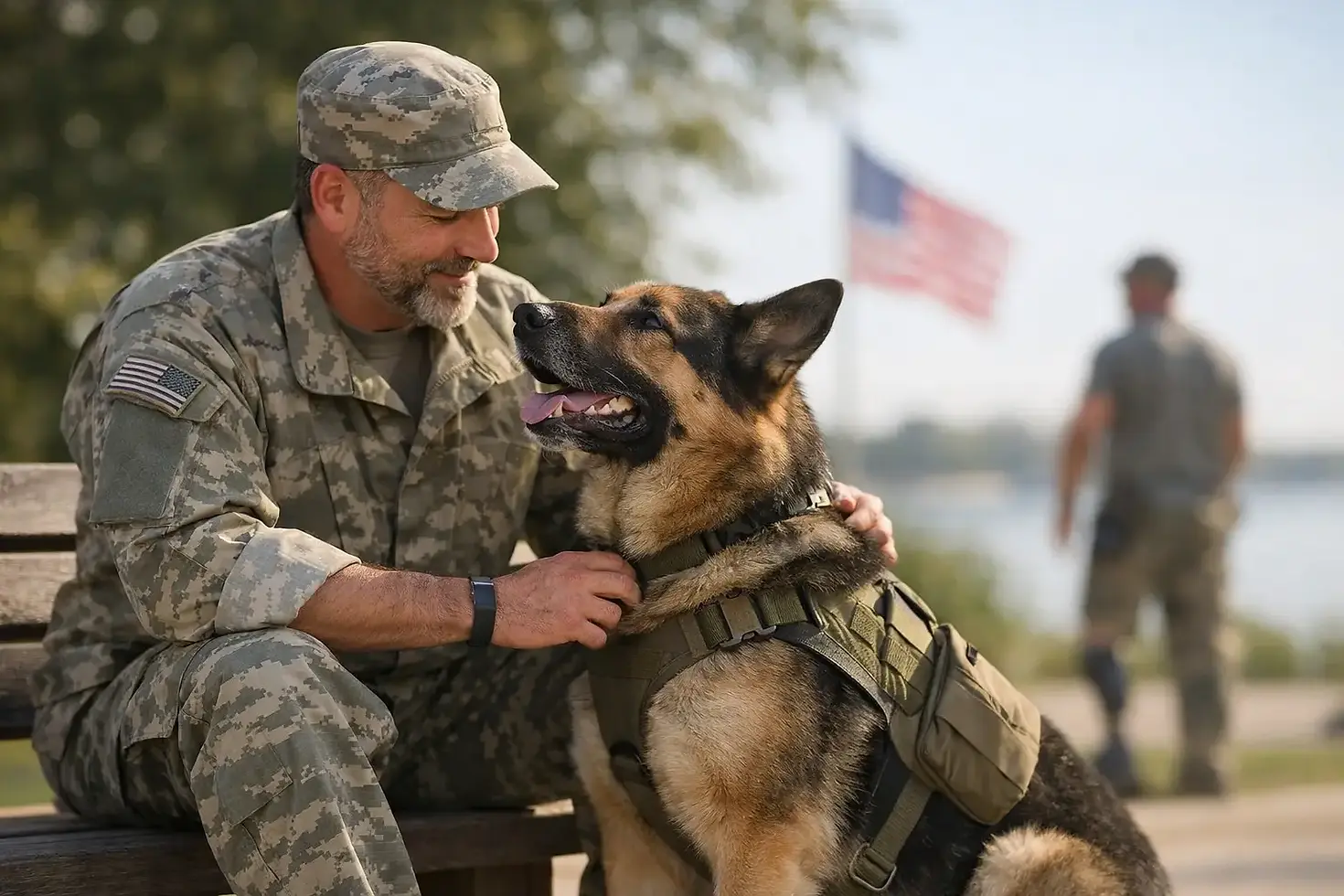
How Service Dogs Help Veterans Every Day
A trained dog can notice a veteran’s rising anxiety before anyone else in the room does. It can create space in a crowded store, wake someone from a nightmare, retrieve needed items after an injury, or simply provide a steady reason to get outside each morning. That is how service dogs help veterans: not by replacing clinical care, family, or community, but by giving their handler practical, reliable support throughout ordinary moments.
For many veterans and military families, the relationship is easy to recognize even when the work is not. A service dog may look calm beside a shopping cart, under a restaurant table, or near a veteran at a school event. Behind that calm presence is extensive training, a close partnership, and a job tailored to one person’s needs.
How Service Dogs Help Veterans in Daily Life
Service dogs are individually trained to perform tasks that mitigate a person’s disability. For veterans, those disabilities may be physical, psychiatric, neurological, or a combination of several challenges. The dog’s work is not a one-size-fits-all checklist. It is built around what helps its handler move through life more safely and independently.
A veteran with mobility limitations may rely on a dog to retrieve a phone, medicine, dropped keys, or a mobility aid. Some dogs are trained to open and close doors, turn lights on, carry small items, or provide carefully trained balance support when appropriate. These tasks can reduce dependence on others and make everyday routines feel more manageable.
For veterans living with post-traumatic stress, a service dog may be trained to interrupt escalating anxiety, guide its handler toward an exit, conduct a room search, or create a buffer in public spaces. A dog might nudge, paw, or lean into its handler when it recognizes signs of distress. During sleep, it may wake a veteran from a nightmare or turn on a light after the veteran wakes.
These supports are deeply personal. What matters is not whether a task looks dramatic to an observer. What matters is whether it helps the veteran participate more fully in daily life.
A steady partner during hard moments
A service dog can give a veteran a predictable point of contact when the environment feels unpredictable. That can mean grounding attention during a stressful appointment, offering tactile reassurance in a crowded place, or helping a handler follow a routine on difficult days.
The effect often reaches beyond a single moment. When a veteran feels more able to leave the house, attend a family gathering, go to work, or complete an errand, those experiences can gradually rebuild confidence. The dog is not asking the veteran to explain every feeling. It is simply trained to respond and stay present.
That companionship matters, but it is different from the trained work of a service dog. A pet can bring enormous comfort. A service dog is also taught specific tasks, public-access skills, obedience, and the ability to focus around distractions. Both relationships are valuable, and respecting that distinction helps protect access for legitimate working teams.
The Benefits Reach Families and Communities
Veterans do not serve in isolation, and neither do their recoveries. Family members often carry concern about a loved one’s safety, sleep, mobility, or ability to manage a difficult day. A well-matched service dog can offer reassurance because the dog is trained to assist consistently, even when a spouse, parent, or friend cannot be nearby.
For children, a service dog can also make a parent’s needs easier to understand. The dog becomes a familiar teammate in the household, one with clear routines and a calming presence. That does not make every challenge disappear, but it can help families create more structure, patience, and connection.
Communities benefit when veterans have more support to take part in work, errands, events, and social life. A service dog team can help shift the focus from limitation to capability. The goal is not to make a veteran’s experience invisible. It is to make daily participation more possible on the veteran’s own terms.
Training Is the Part Many People Never See
The heartwarming image of a veteran meeting a dog is real, but it is only one point in a longer process. Preparing a service dog requires careful selection, socialization, health screening, professional instruction, task training, and extensive work with the future handler. Not every friendly dog has the temperament, focus, or physical soundness for service work.
Training also continues after placement. The veteran and dog must learn each other’s signals, routines, boundaries, and responsibilities. Public settings bring distractions that are difficult even for highly trained dogs. Ongoing guidance helps the team stay safe, effective, and confident.
This process takes time and resources. The cost can be significant, especially when an organization provides individualized training and follow-up support. Some veterans receive assistance through established programs, while others face gaps in eligibility, availability, location, or wait times. First responders can face similar barriers.
That is why community support matters. It helps more qualified veterans and first responders access the trained canine partners who may make a meaningful difference in their independence and well-being.
What Respect for a Working Dog Looks Like
People naturally want to greet a beautiful, calm dog in public. Yet a service dog may be concentrating on its handler’s breathing, movement, surroundings, or cues. A distraction that seems harmless can interfere with the dog’s job.
The kindest approach is simple: ask before interacting, and accept no graciously. Do not pet, call to, feed, whistle at, or photograph a service dog without permission. Give the team room in lines, aisles, and doorways. If the handler welcomes a conversation, follow their lead rather than asking personal questions about their disability or military service.
Pet owners can help, too. Keep dogs leashed and under control in public, because an off-leash approach can disrupt a working dog or create a safety concern. Respecting service dogs protects the people who depend on them.
Shop With Purpose to Support a Hero in Need
Support for service-dog training does not have to begin and end with a special event or a single donation. Everyday choices can help fund work that changes lives. At Luv My Pets, 10% of every purchase goes to a veteran support fund that helps finance training for service and comfort dogs for veterans and first responders whose needs are not covered by the VA.
For pet owners, that creates a straightforward way to care for the animals already in their homes while standing behind those preparing to serve someone else. Choosing premium pet essentials, nutrition, treats, and practical everyday products can become part of a larger act of support. Your pet deserves thoughtful care, and our veterans deserve a partner trained to help them thrive.
Service dogs do not ask veterans to be anything other than who they are. They meet them at the door, beside the bed, in the grocery aisle, and during the moments no one else sees. Supporting their training is one practical way to honor service with service - and help more heroes build a life with greater confidence, connection, and hope.


Comments