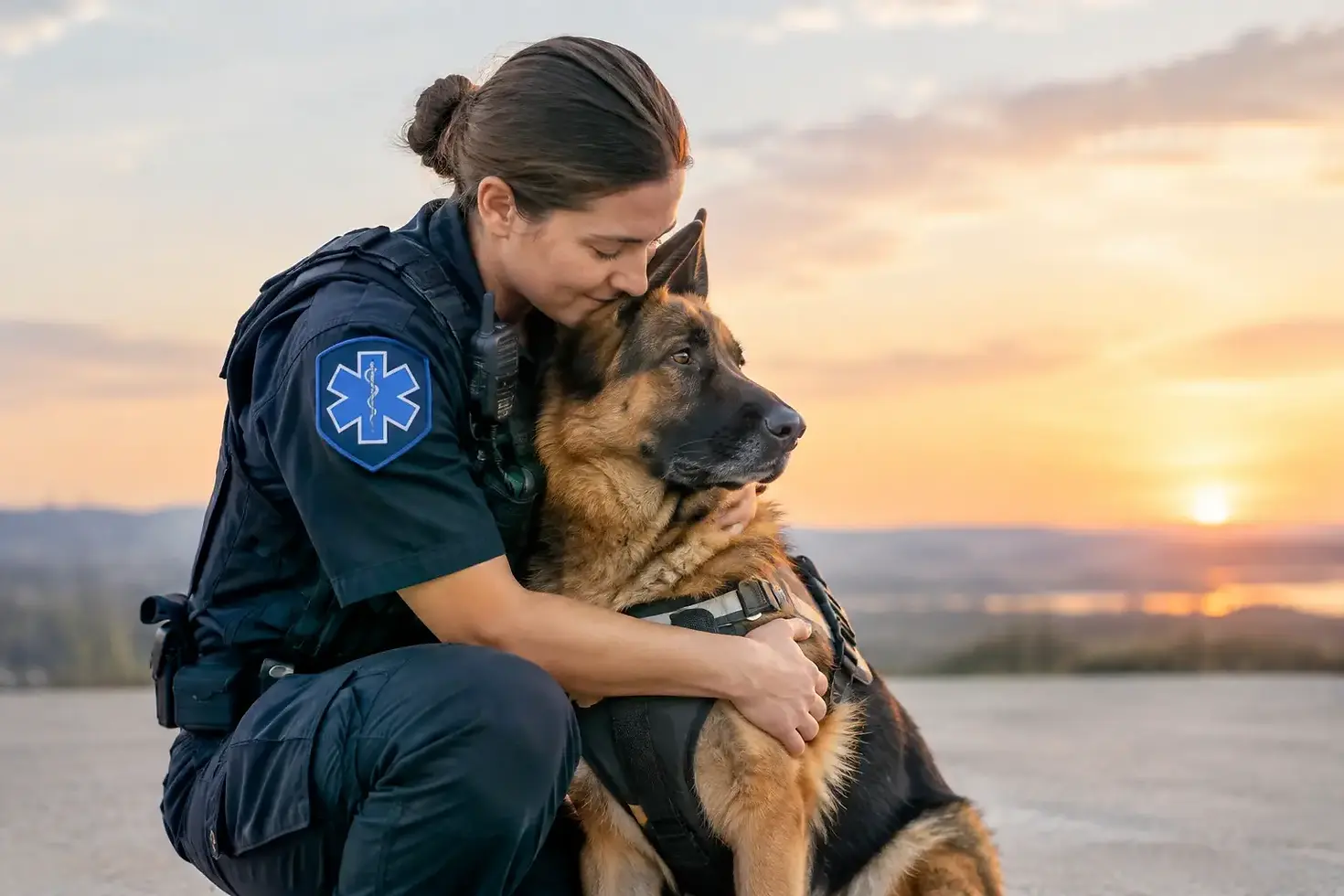
First Responder Canine Stories That Stay With Us
The quietest moments after a difficult call can be the hardest. For many first responders, the shift may be over, but the sounds, images, and weight of responsibility do not always leave when the uniform comes off. That is where first responder canine stories become more than feel-good accounts of dogs and heroes. They show the steady, practical comfort a well-trained canine companion can bring to someone who has spent a career showing up for others.
A dog cannot erase trauma or replace professional care. What a dog can do is offer a reason to step outside, a familiar routine, a calming presence, and affection without questions. For a firefighter, paramedic, dispatcher, law enforcement officer, or veteran, those small moments can help rebuild a sense of safety and connection.
Why First Responder Canine Stories Matter
People are drawn to these stories because they reveal a kind of partnership that is easy to recognize. A first responder may be trained to stay composed under pressure, make decisions quickly, and put other people first. At home, a service or comfort dog can meet that person with patience, consistency, and no expectation that they explain what happened.
The impact is often found in ordinary routines rather than dramatic scenes. A dog nudges its handler awake after a nightmare. A morning walk creates a reason to leave the house. Feeding time, grooming, and play offer a dependable rhythm when life feels unsettled. A canine companion may also help a handler feel more comfortable reentering public spaces, meeting neighbors, or spending time with family.
These are not signs of weakness. They are signs that support works best when it is personal, dependable, and available every day. First responders spend their working lives protecting their communities. They deserve support that honors the full person behind the job.
The Dog Beside the Uniform
Not every working dog has the same role. Police K-9s, search-and-rescue dogs, and detection dogs serve alongside first responders during active operations. Their training is highly specialized, and their work requires skill, discipline, and a close bond with their handlers.
Service dogs and comfort dogs serve a different, equally meaningful purpose. Some are trained to perform specific tasks for a person with a disability, such as interrupting distress, providing grounding through touch, retrieving needed items, or creating space in a crowded area. Others provide emotional support and companionship that can help reduce isolation and encourage healthy routines.
The distinction matters because each dog, handler, and situation is different. A service dog is not simply a well-behaved pet, and not every dog is suited to service work. Training takes time, professional guidance, careful placement, and follow-up support. The right match depends on a person’s needs, home life, activity level, and long-term care plan.
That care continues long after training is complete. Like every beloved dog, a working or support canine needs quality food, preventive care, safe gear, enrichment, rest, and regular veterinary attention. Supporting the dog also supports the person who depends on that partnership.
A Partnership Built on Trust
The strongest canine stories are rarely about a dog being a hero for one dramatic minute. They are about trust built over hundreds of ordinary days. The handler learns the dog’s signals. The dog learns its handler’s pace, habits, and moments of stress. Together, they create a reliable pattern of care.
For someone recovering from the strain of emergency work, that trust can be deeply grounding. A dog does not need perfect words. It notices changes in movement, breathing, tone, and routine. It brings a person back to the present through a leash in hand, a warm head against a knee, or an eager invitation to play.
Families can feel the difference, too. A partner or child may see their loved one laughing again during a game of fetch, sleeping more peacefully, or becoming more willing to join a weekend outing. Those moments may look simple from the outside. Inside a home, they can mean everything.
Support Should Extend Beyond the Shift
First responders are often celebrated in public, especially after a crisis. Meaningful support also has to exist in the months and years when the spotlight has moved on. Access to canine training and placement can be life-changing, yet it may be out of reach for veterans and first responders whose needs are not fully covered by available benefits.
That is why mission-focused support matters. When communities help fund the training of service and comfort dogs, they help create a practical path toward independence, confidence, and daily companionship. They also recognize that recovery does not follow one timeline. Some people need task-based assistance. Others need a gentle companion that makes the hard days less lonely. Often, care works best alongside clinical treatment, family support, peer connection, and healthy routines.
At Luv My Pets, 10% of every purchase goes to a veteran support fund that helps finance service and comfort dog training for veterans and first responders with needs not covered by the VA. It is a direct way to make everyday pet shopping carry a larger purpose. Your dog’s essentials can help support a hero in need and the future canine companion who may stand beside them.
How Pet Owners Can Honor These Canine Teams
You do not need to be a trainer, veteran, or first responder to make a difference. Start by treating every working dog team with respect. If you see a service dog in public, give the dog space and avoid calling to it, petting it, offering food, or trying to get its attention without permission. Even a friendly interruption can distract a dog from an important task.
If a first responder or veteran in your life has a canine companion, let them guide the conversation. Some people are glad to share their story. Others may prefer privacy. A simple, sincere thank-you is enough. Respect includes understanding that a dog may be part of someone’s care plan, not an invitation for public questions.
Pet owners can also support the bigger mission through thoughtful purchases and informed giving. Quality nutrition, durable supplies, and safe everyday care help our own dogs thrive. Choosing retailers and organizations that invest in canine training can extend that care to people who have served their communities under extraordinary pressure.
The Stories We Should Keep Telling
The most meaningful first responder canine stories do not ask us to see dogs as a cure-all or first responders as people who never need help. They ask us to see both with honesty. A trained dog is a major responsibility, a financial commitment, and a living partner whose needs must be met for years. The fit is not right for every person, and it should be supported by qualified training and appropriate care.
Still, the bond can open a door that had felt closed. It can bring a veteran back to a morning routine, help a dispatcher take a calmer walk through the neighborhood, or give a firefighter’s family a shared source of joy after a long season of strain. These partnerships remind us that service can take many forms.
The next time you fill a food bowl, choose a new leash, or stock up on your pet’s everyday essentials, remember the quiet good that canine companionship can create. Caring for your own pet can also help build a future where more heroes have a loyal dog beside them when they need one most.


Comments